Yesterday, I received my copy of the 25th/40th Anniversary edition of Little, Big. Like many longtime re-readers of this novel, I’ve been waiting for this for several years. The edition is a long labor of love by the publisher Ron Drummond who first proposed the idea to John Crowley in 1992 or 1993. You can read about the history of the project and its ups and downs on the book’s website here. Cheers to Deep Vellum for helping this reach completion and reality.
The Afterword by Harold Bloom is good. It’s pure Bloom. He wrote it in 2006. He shares his very personal experience of the novel. In his typical style, he writes about Crowley’s precursors and how Little, Big is the only book in its own genre. I think he wrote elsewhere he read it every year, and 2006 was 25 years after original publication.
The thing I most wanted to see in this beautiful new edition was the artwork by Peter Milton. The illustrations and sketches have many resonances with the novel. They are not new original art made for the book. They are works that seem to echo or chime with it. The book website has a good overview of the motivation behind the selection of Milton for this book here.
Here are some of the pages and illustrations I liked during my first run through the pages.
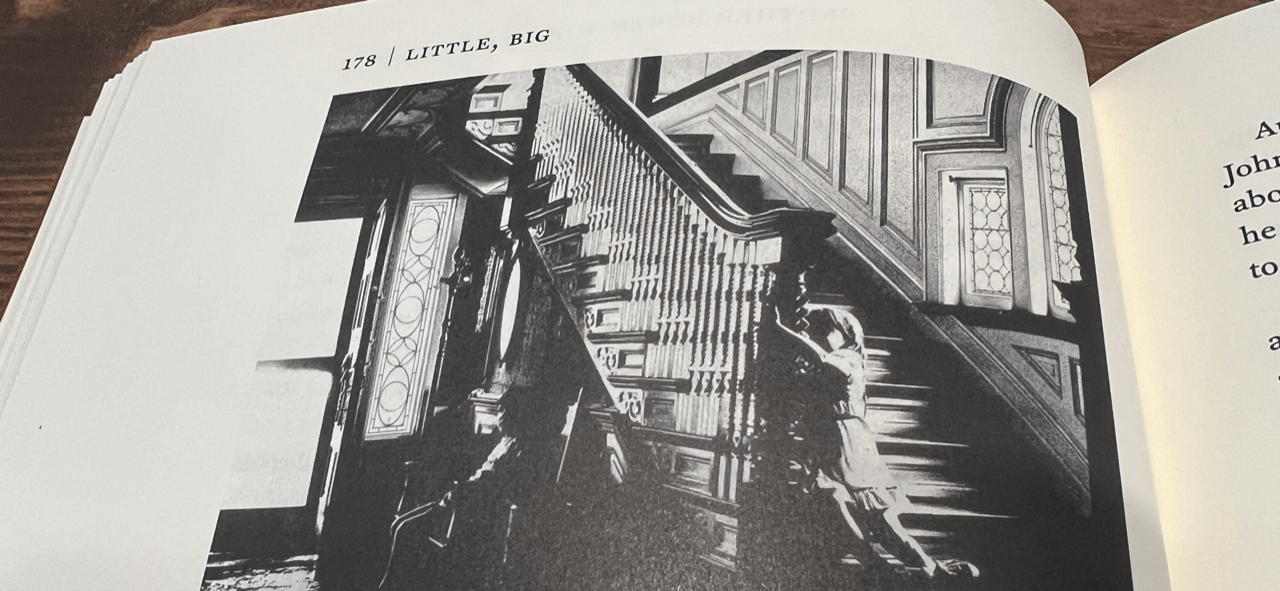
Little, Big is about a house if it’s about anything. As mentioned above, the Peter Milton illustrations were existing work. They were not made for this book, so it’s lovely when there are correspondences like this one.

And this one. It’s a strange house after all.
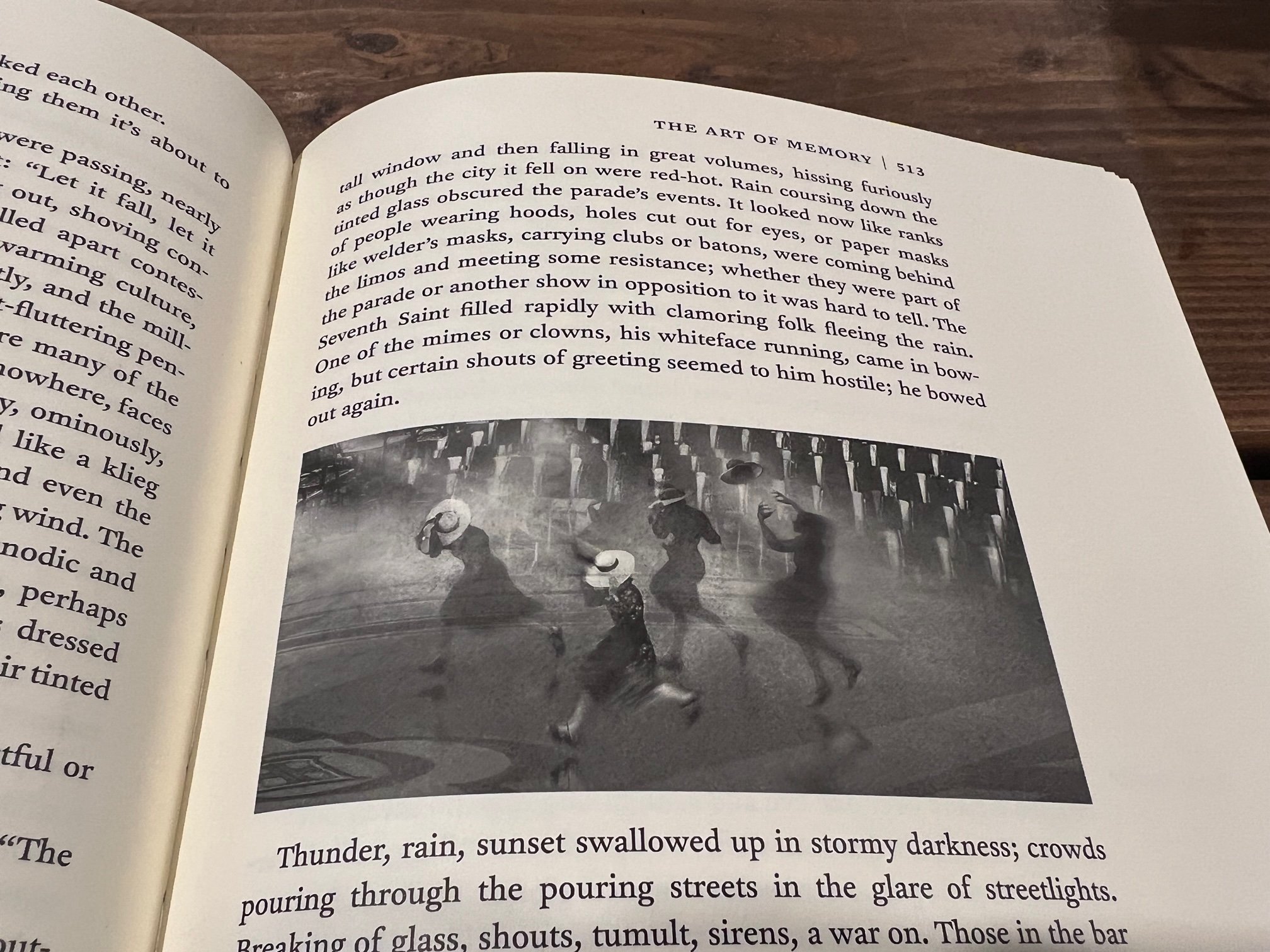
Many of the human figures in the illustrations are transparent, as if they are fading out from the space they occupy, or as if they are fading in from another time.
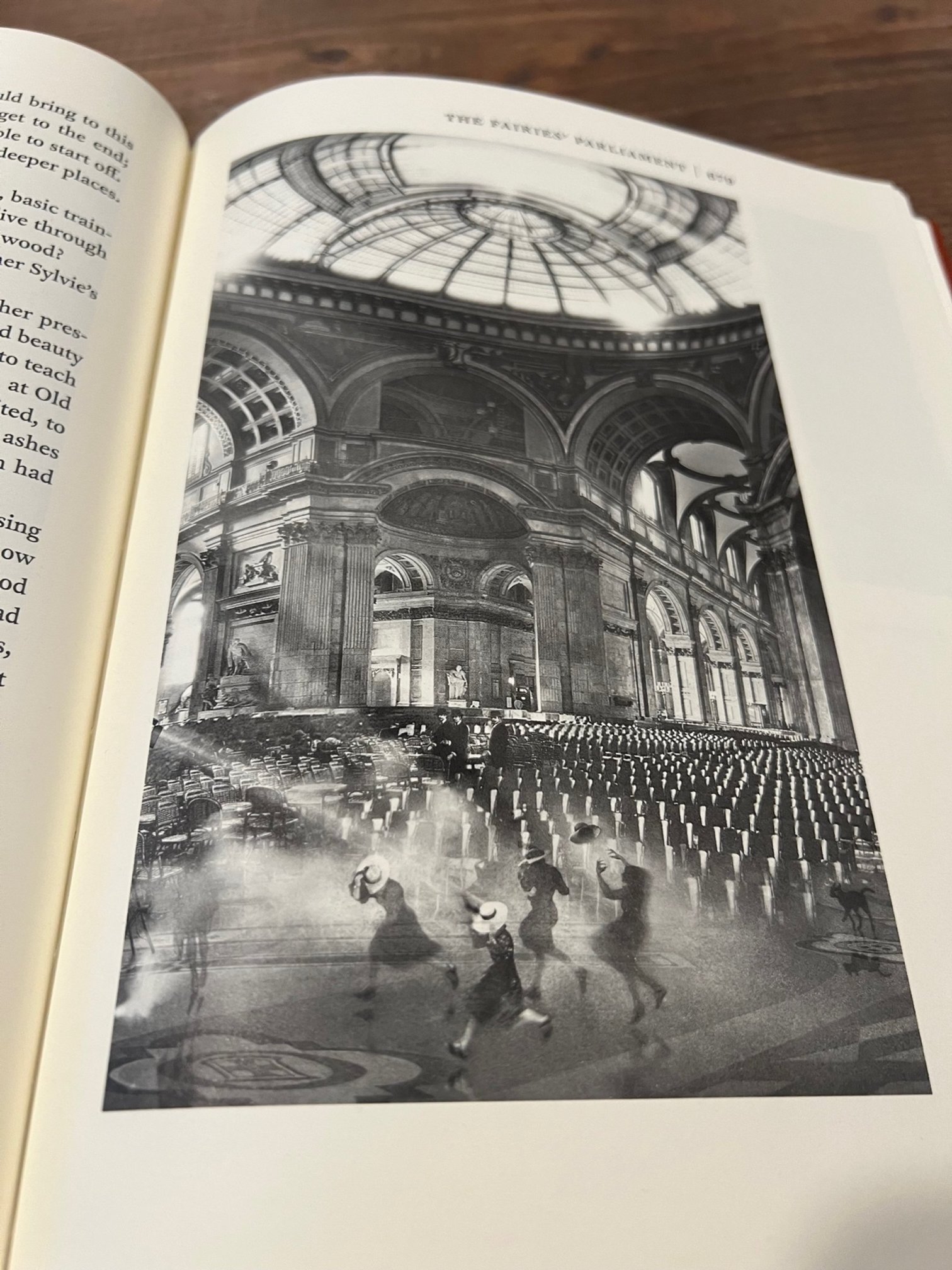
There are 15 full illustrations in the book, but details from them repeat. Sometimes the details come first and are later revealed as part of the larger work. Sometimes the larger work comes earlier and the details work like themes in a piece of music.
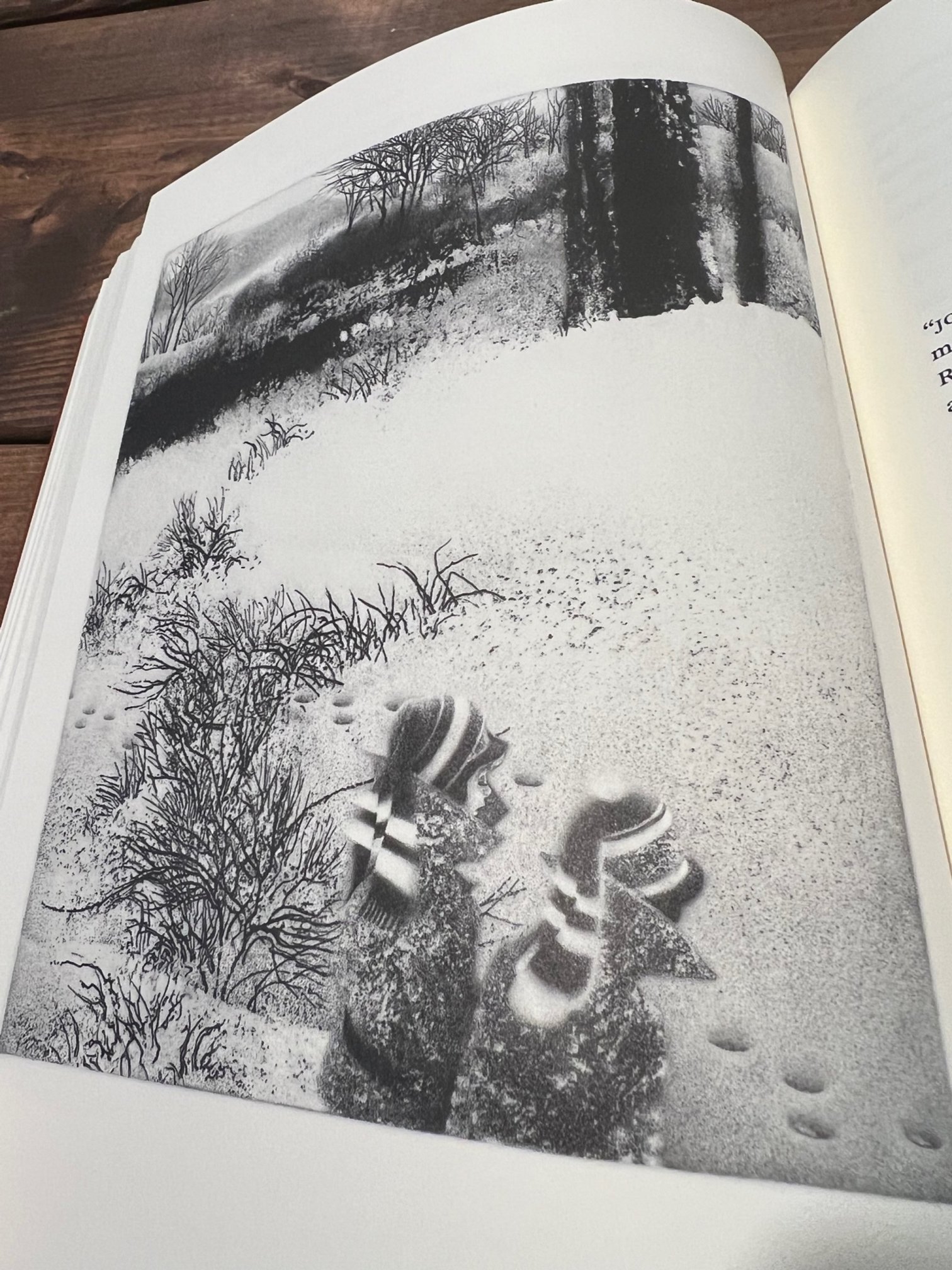
There are pairs of women and girls throughout. Like the sisters Alice and Sophie in the novel.

A winged pair.
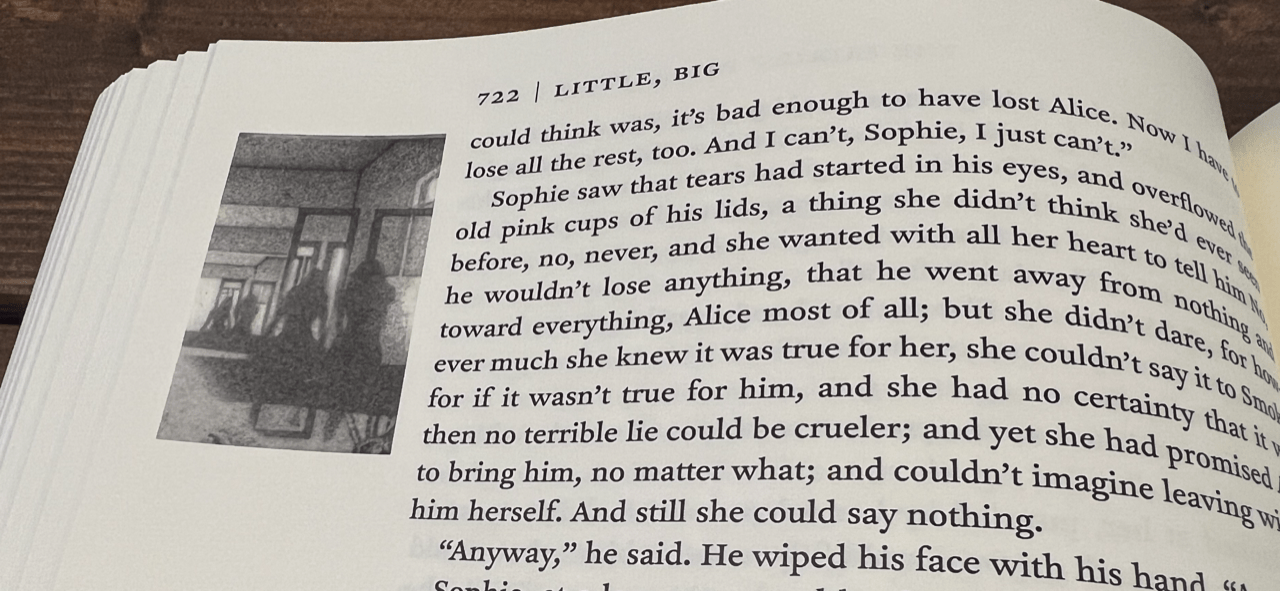
A shadowed pair, a mirrored pair.
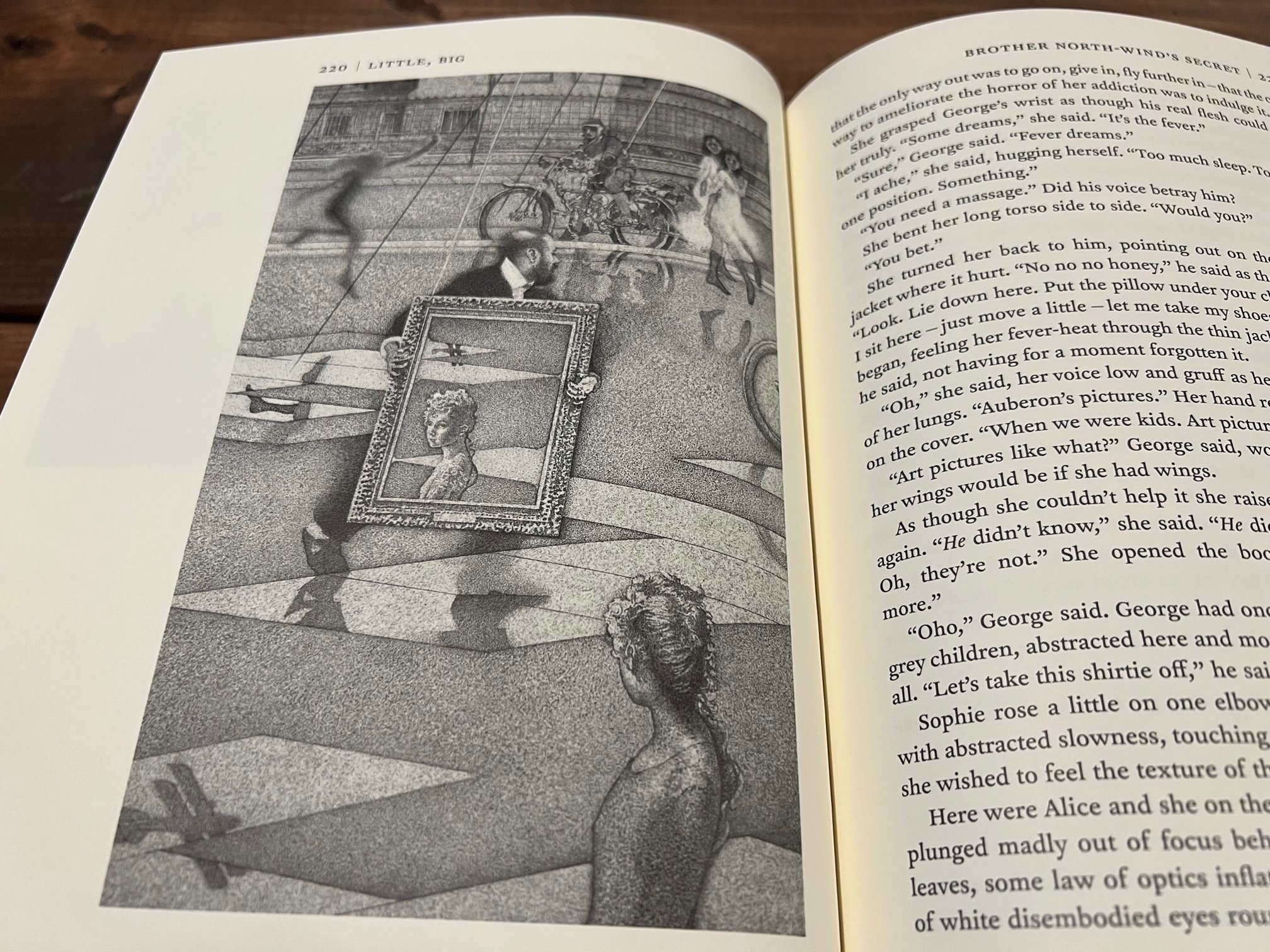
One of my favorites. This has (I think) no connection to the novel except as a strange cousin of mood and atmosphere and theme.
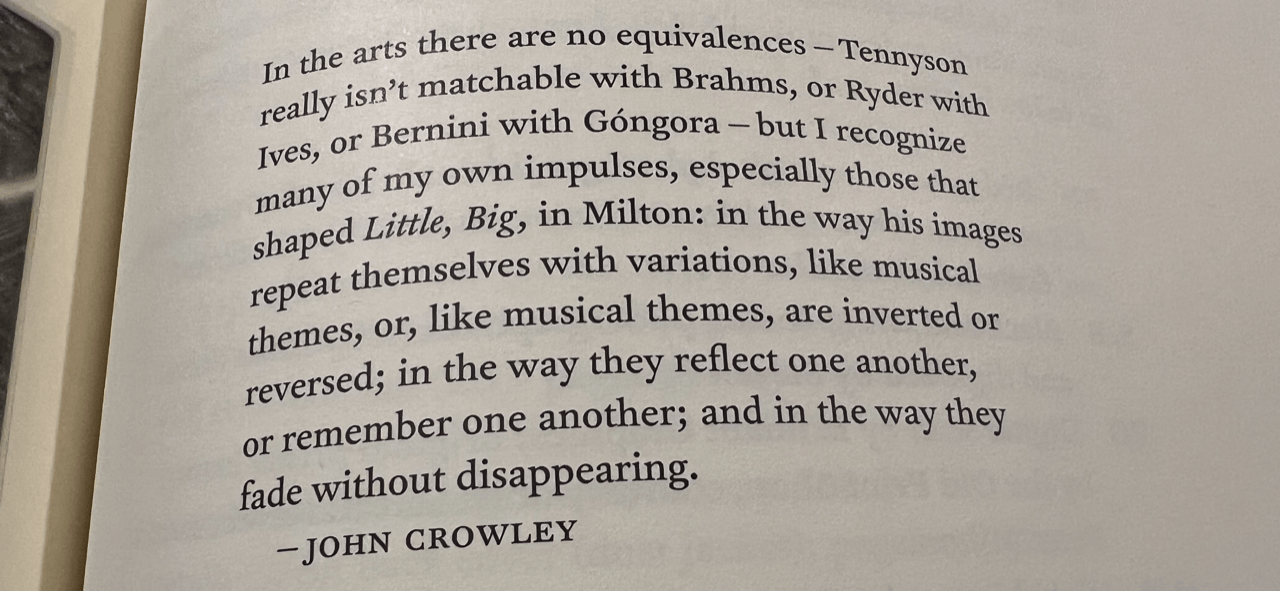
John Crowley’s blurb about the art.


 Talking Big
Leave a comment